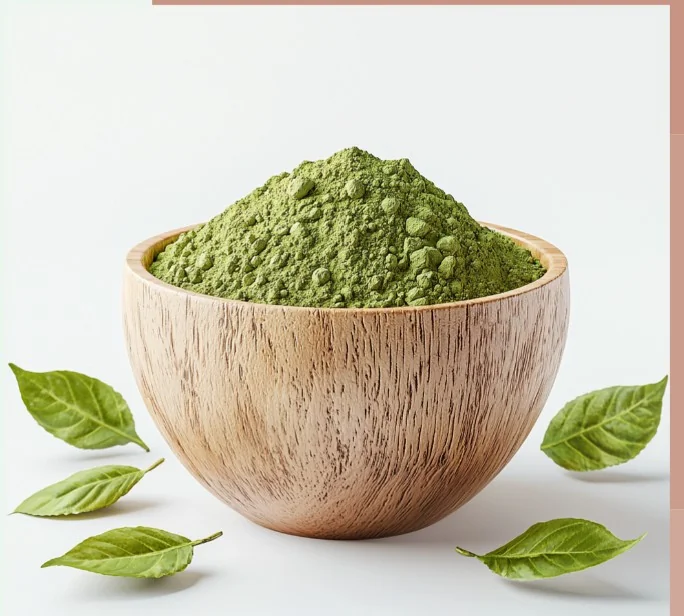
Green vein kratom is kratom sold under a green label, which sellers usually explain as leaf picked at mid-maturity, between the white and red stages. “Green vein” is less a single strain than a family name. On a Canadian menu it covers powders sold as Super Green Malay, Green Hulu Kapuas, Green Maeng Da and more, each with its own story attached. To understand what you are buying, it helps to split every green name into its two parts: the colour, which is a claim about the leaf and how it was dried, and the place or grade word, which often says less than it seems.
This breakdown covers what “green” does and doesn’t establish, decodes the names you will meet most often, and explains how to compare green lots on evidence rather than labels. For the legal background in Canada, see our guide to kratom’s legal status.
The colour part: what “green” claims
Kratom leaves change as they develop. University of Florida horticulturists describe red, white and green as the vein colours most commonly seen on kratom, varying with the leaf’s life cycle and stage of development. In trade descriptions, green sits in the middle, picked after a pale stage and before the vein reddens. That ordering comes from sellers rather than from published harvest studies.
After picking, green lots are usually described as dried in shade or indoors so the powder keeps a fresh green colour. Here a caution applies. A 2025 study in Frontiers in Plant Science points out that sellers tend to assign the colour by looking at the milled powder rather than at the leaf vein on the tree, and that drying conditions change the alkaloid profile; drying temperature alone was enough to turn powder from one batch of leaves either green or reddish. Green tells you a lot was handled to stay green; it is not a chemical specification.
The name part: three green labels decoded
Maeng Da: a grade word
“Maeng da” is Thai slang that sellers adopted to mean top grade. It is not a botanical variety, and today it is used across red, white and green products. Like most export kratom, much of the Green Maeng Da on the market is grown in Indonesia despite the Thai name. Our Green Maeng Da powder guide looks at this strain in detail.
Hulu Kapuas: a river district
This is the most geographically specific of the three. Hulu means upstream in Indonesian, and Kapuas Hulu is a regency on the upper Kapuas River in West Kalimantan, on Borneo, where kratom is harvested commercially. Green Hulu Kapuas is therefore one of the few common strain names that points to a real growing district.
Malay: a country name with caveats
“Malay” refers to Malaysia, where kratom (known locally as ketum) grows wild but has long been restricted under the country’s Poisons Act. Because of those restrictions, a powder sold as Malay is not necessarily Malaysian-grown, so check the listing for its actual origin. “Super” is a grading word rather than a separate plant. You will find it in our range as Super Green Malay.
Comparing green lots on evidence
Because the names are loose, the best comparison is document to document:
- Batch numbers. Every bag should carry one, so you can match it to a report.
- Certificates of analysis. Our Lab Reports page currently includes certificates for Green Maeng Da and Green Hulu Kapuas, with mitragynine, moisture, metals and microbiology figures and the limits beside them.
- Report dates. A certificate describes one sample on one date. A newer lot can read differently.
- Side-by-side samples. Mixed packs let you put several strains next to each other: five small bags in the Sampler Pack (5 x 25g), or four larger ones in the Kilo Pack (4 x 250g).
Green, white and red compared
The fairest way to compare the vein colours is by what each label claims about the leaf, not by promised effects:
- White: described as the youngest leaves, picked while the vein is pale, and usually described as dried away from strong sun.
- Green: described as mid-maturity leaves, usually described as dried in shade or indoors.
- Red: described as the most mature leaves, often described as dried for longer or with more sun.
Yellow and gold are not vein colours at all; they name extra processing. And because, as the 2025 study above found, the label usually follows the look of the milled powder, none of these descriptions can be confirmed from the bag alone. Our strain comparison guide sets the colours side by side, and how kratom is harvested explains where each one comes from.
Buying green vein kratom from Kratom Canada
Our green vein range currently covers the three names decoded above: Green Maeng Da, Green Hulu Kapuas and Super Green Malay, each sold as loose powder in several bag sizes. Other Canadian sellers are covered in our vendor reviews.