
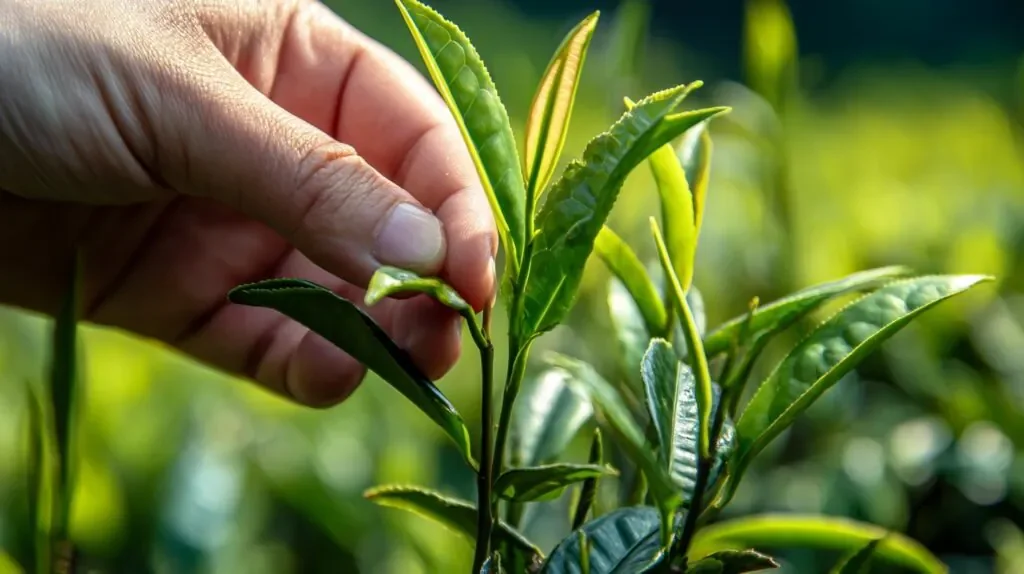
Red, white, green and yellow kratom all come from the same tree, Mitragyna speciosa. Red, white and green borrow the colours of the leaf vein, and sellers usually explain them by when the leaves were picked; yellow is a processing label. Research backs the role of drying more firmly than the picking explanation, since drying conditions alone can change the colour of a powder. Here is what each colour is meant to signal, and where the evidence behind the labels is solid or thin.
Picking: what vein colour can and can’t tell you
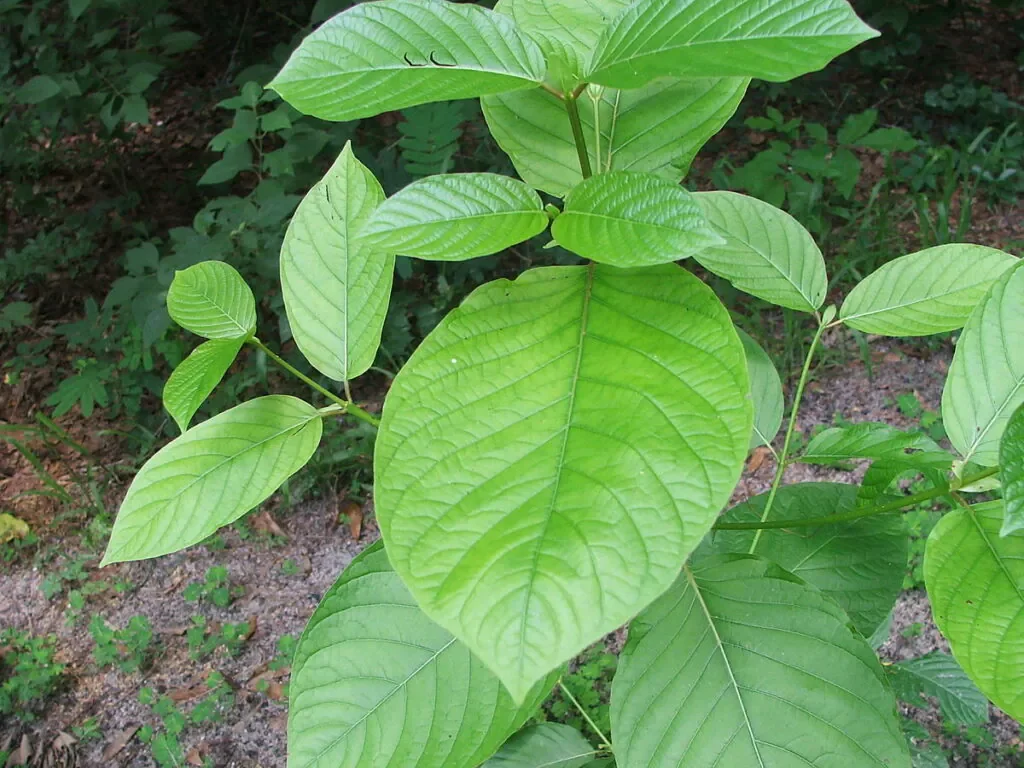
A kratom leaf changes as it grows. University of Florida horticulturists, who study kratom as a crop, note that the most commonly seen vein colours are red, white and green, depending on the leaf’s life cycle and stage of development. The trade turns that into a simple picking sequence:
- White is described as the youngest usable leaves, picked while the central vein is pale.
- Green is described as leaves picked at mid-maturity.
- Red is described as the most mature leaves, picked once the vein has darkened.
That sequence is how sellers explain the names. We have not found published research that documents it for commercial harvests, and the study discussed below shows that drying can shift a powder’s colour on its own.
Commercial picking is usually described as hand work, taking leaves selectively so the tree keeps producing new growth. Because one tree carries leaves at several stages at once, sorting after picking matters.
Drying and curing: where the labels diverge
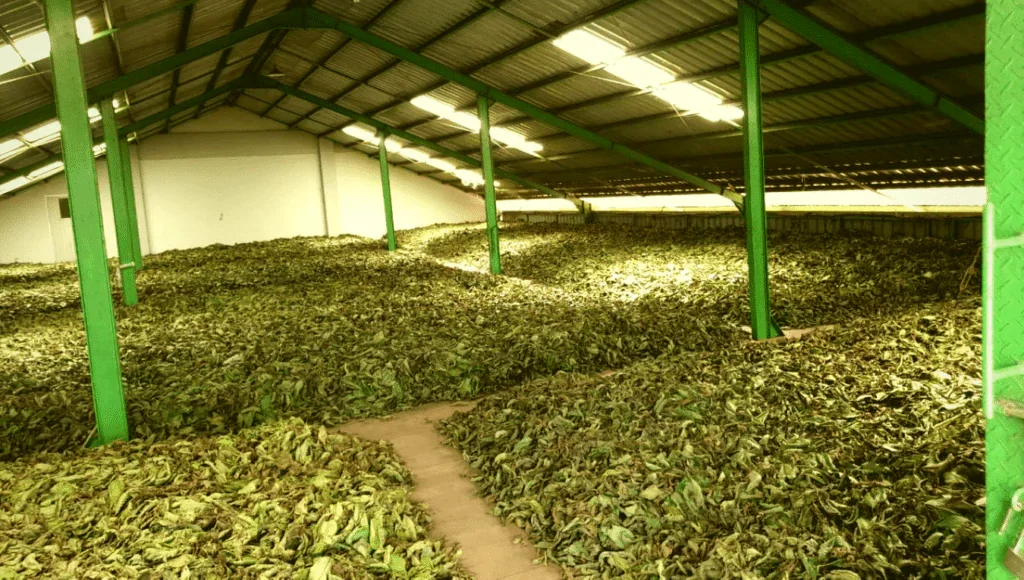
After picking, leaves are withered, dried and milled. Trade descriptions usually say white lots are dried indoors or in shade to stay pale, green lots are dried in a controlled way to keep their colour, and red lots get a longer cure or more sun. Yellow is the odd one out: it is not a vein colour at all, but a name for extra processing, such as longer withering, light fermentation or blending.
These handling steps are not cosmetic. A 2025 University of Florida study found that withering time and drying temperature changed the leaves’ alkaloid content, with cooler drying preserving more of the main alkaloids. The same authors note that commercial harvest and drying methods are largely undocumented, and that Western strain labels are most often based on the colour of the finished powder rather than the vein at picking. In their trials, leaves from the same batch produced a reddish powder when dried at 60°C and a green one when dried at 25°C.
The four labels side by side
| Label | Leaf stage sellers describe | Typical handling sellers describe | How firm the basis is |
|---|---|---|---|
| White | Young, pale vein | Indoor or shade drying | Trade description; drying alone can shift powder colour |
| Green | Mid-maturity, green vein | Controlled drying to keep colour | Trade description; drying alone can shift powder colour |
| Red | Mature, darker vein | Longer cure, more sun | Trade description; drying alone can shift powder colour |
| Yellow | Not tied to a vein colour | Extra withering, fermentation or blending | A process name with no single standard |
Do the colours mean different chemistry?
Less than marketing suggests. A 2023 study compared lab certificates for six products from one brand sold as different strains, including red, green and white Maeng Da, and found no significant differences in their mitragynine or total alkaloid content. That does not mean every lot is identical. It means the colour name alone is not a reliable guide, and the certificate for a specific batch tells you more.
Reading a colour name on a bag
When you compare two strains, treat the colour as a description of picking and handling, and look for three things alongside it:
- Origin: where the leaf was grown, stated separately from the strain name.
- Batch number: printed on the bag, so it can be matched to a report.
- Certificate: a dated lab report with mitragynine, moisture, metals and microbiology results.
Our Lab Reports page lists the certificates we currently publish by strain, and our certificate guide explains each line. To browse by colour, see our green, red, white and yellow ranges.